

Systems medicine, mechanistic intelligence, and responsible inquiry

Research

Overview

Ronni Shino's research interests sit at the intersection of mechanistic biomedical reasoning, evidence evaluation, and systems thinking — with a focus on how complex biological and environmental factors shape human performance and health.

The work presented here reflects ongoing inquiry, conceptual frameworks, and research directions. These are research interests and structured thinking tools — not claims of institutional validation, clinical adoption, or peer-reviewed acceptance unless explicitly stated.

Flagship Research Area

Mechanistic Intelligence

A flagship research direction focused on understanding biological systems through mechanism — not correlation alone.

Mechanistic intelligence asks how pathways, interactions, and constraints produce observable outcomes. It informs how evidence is interpreted, how decisions are structured, and how complex health and performance questions are approached with discipline.

  • Mechanistic reasoning
  • Systems thinking
  • Human performance mechanisms
  • Evidence interpretation
  • Structured decision frameworks
Mechanistic reasoning framework
Mechanism-Driven Biomedical Intelligence Engine

computational environment

MDBIE

Mechanism-Driven Biomedical Intelligence Engine

A computational reasoning environment that structures biomedical information into mechanistic pathway maps. MDBIE is a conceptual tool for exploring clinical reasoning, protocol design, and systems-level disease analysis — presented as an authored framework, not a validated clinical product.

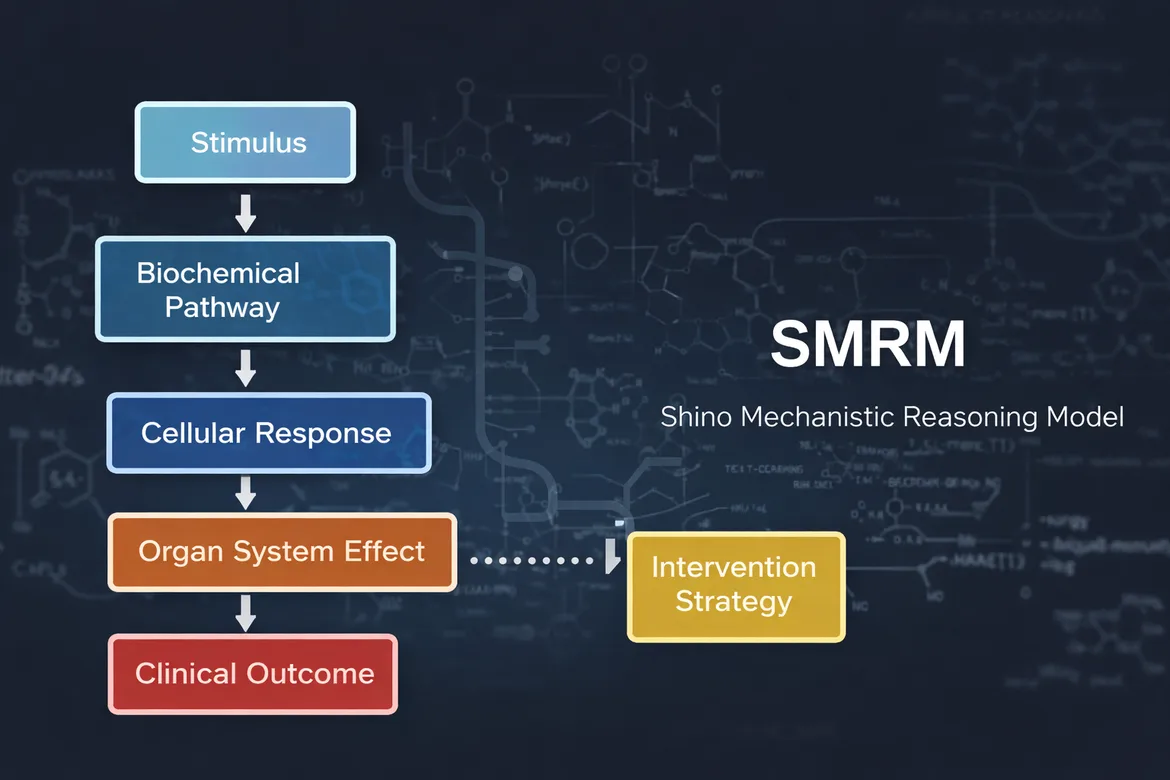
Shino Mechanistic Reasoning Model

conceptual framework

SMRM

Shino Mechanistic Reasoning Model

A structured reasoning model designed to map biological processes through mechanistic pathways rather than statistical correlations alone. SMRM focuses on causal interactions between biochemical systems, immune responses, and therapeutic interventions.

Nutracovigilance

Evidence-informed evaluation of supplement quality, safety, and formulation — grounded in mechanistic thinking.

Nutracovigilance extends pharmacovigilance principles into the nutraceutical and supplement landscape. The focus is responsible evaluation: ingredient quality, safety signals, formulation philosophy, and the gap between marketing claims and mechanistic evidence.

  • Supplement evaluation
  • Ingredient quality
  • Safety monitoring
  • Formulation philosophy
  • Evidence-informed nutrition
  • Product quality

Air Quality

Environmental exposure, filtration, and the relationship between clean air and human performance.

Air quality research examines how particulate matter, indoor environments, wildfire smoke, and filtration systems affect exposure and wellbeing. The interest is practical and systems-oriented — connecting environmental conditions to performance, recovery, and long-term health.

  • Indoor air quality
  • PM2.5
  • Filtration
  • Wildfire smoke
  • Environmental exposure
  • Human performance and clean air

Research Philosophy

How inquiry is approached — with curiosity, rigour, and restraint.

Curiosity

Research begins with genuine questions — not predetermined conclusions.

Disciplined thinking

Frameworks are tools for clarity. Claims stay proportionate to the evidence behind them.

Evidence evaluation

Sources, mechanisms, and limitations are weighed before conclusions are drawn.

Systems perspective

Biological, environmental, and behavioural factors are understood in relationship — not isolation.

Continuous learning

Inquiry is ongoing. Frameworks evolve as understanding deepens.

Research Collaboration